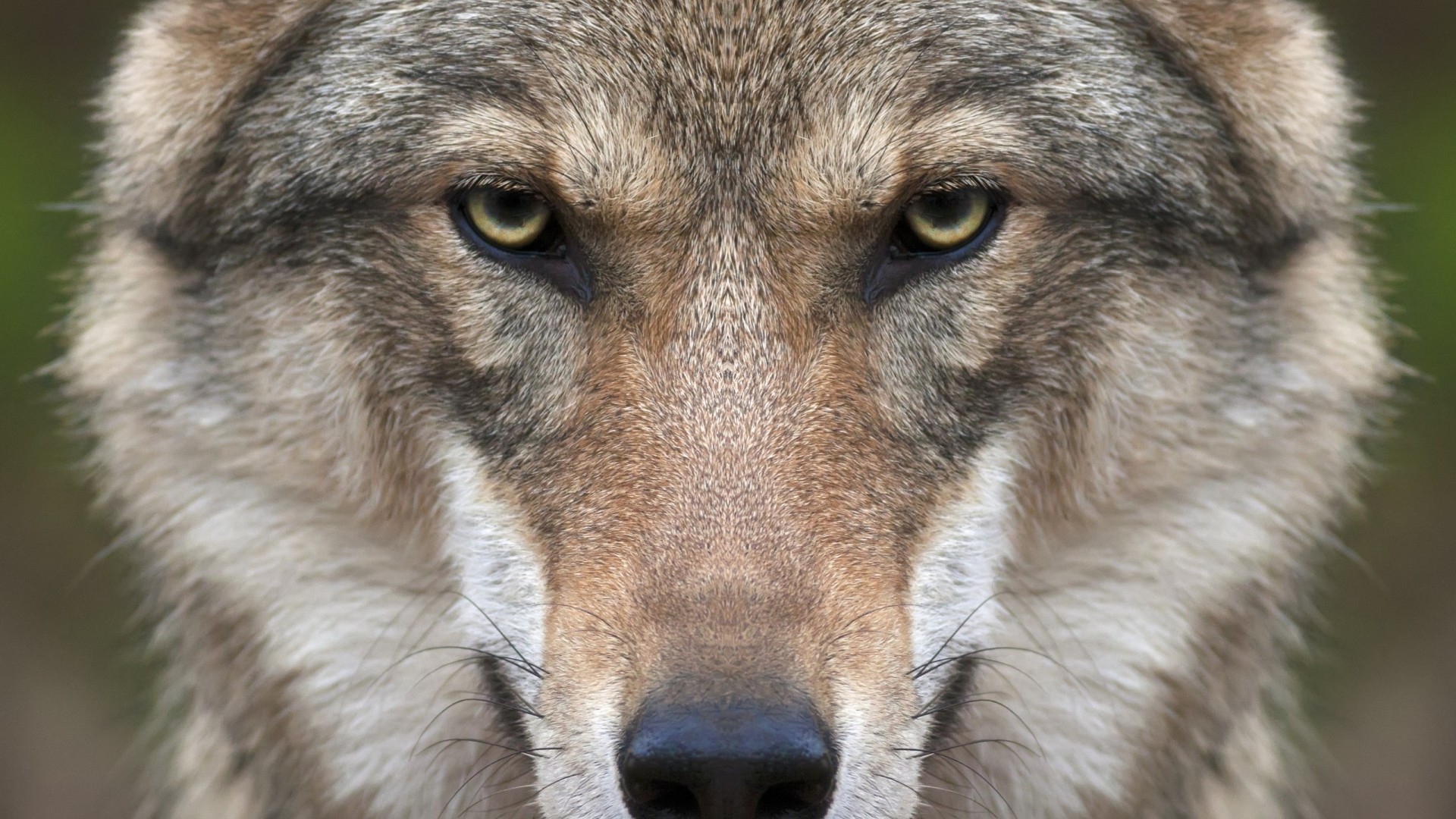
In the ever-evolving landscape of digital media, where trends are born and forgotten within hours, a new phenomenon has captured the collective imagination of millions. It is not a political scandal, a celebrity breakup, or a blockbuster movie trailer. Instead, it is something far simpler, far stranger, and undeniably captivating: the face of an animal. This seemingly ordinary creature, with its uniquely expressive and oddly human-like features, has sparked an internet craze that shows no signs of slowing down. From Twitter feeds to TikTok compilations, Instagram reels to Reddit threads, this viral animal face has become the mascot of the moment, and its rise to fame offers a fascinating glimpse into the psychology of online sharing, meme culture, and the modern hunger for the bizarre.
But what exactly is it about this particular animal face that has caused such a stir? Is it the wide, knowing eyes that seem to stare directly into the human soul? Is it the peculiar arrangement of fur, snout, and whiskers that resembles a familiar emotion we cannot quite name? Or is it simply the randomness of the internet, where a single photograph uploaded at the right time can catapult an unknown creature into global stardom? This article will dissect the phenomenon from every angle, exploring the origins of the image, the reasons for its explosive popularity, the science behind why we find animal faces so engaging, and the commercial and cultural implications of a viral sensation. By the end, you will understand not just why this animal face is famous, but how viral content shapes the way we communicate, laugh, and connect in the digital age.
A. The Mysterious Origin of the Face
Every viral legend has a starting point, and the story of this animal face is no exception. Unlike manufactured marketing stunts or paid influencer campaigns, this craze began organically—almost accidentally. The original image is believed to have been captured by an amateur photographer in a rural part of Southeast Asia, though competing claims have surfaced from South America and Eastern Europe. The animal in question appears to be a hybrid-like creature: its body resembles a common domesticated cat, but its face carries the features of something more ambiguous. Some have compared it to a slow loris, others to a fox with a genetic anomaly, and a vocal minority on the internet have even suggested it might be a completely new species or a cleverly designed AI-generated hoax.
The photograph was first uploaded to a small Facebook group dedicated to “strange-looking pets” in early March 2025. Within 48 hours, it had been shared over 200,000 times. From there, it migrated to Twitter, where a user with the handle @WeirdNature added the now-famous caption: “This creature knows what you did last summer.” The tweet exploded, garnering 3.5 million likes and 12 million retweets in less than a week. Soon after, the image appeared on TikTok set to eerie lo-fi music, and the hashtag #AnimalFaceCraze began trending globally.
B. Why This Face? The Psychology of Viral Animal Content
To understand the craze, one must first understand the human brain’s innate response to animal faces. Psychologists have long known that humans are hardwired to pay attention to faces it is a survival mechanism. But when that face belongs to an animal and contains subtle human-like expressions, a phenomenon called “anthropomorphic dissonance” occurs. This animal face, with its slightly asymmetrical eyes, partially open mouth, and head tilt, triggers a unique neurological response: we want to interpret its emotion, but we cannot quite decide if it is sad, curious, amused, or judgmental.
A. The Uncanny Valley Effect Reversed: Typically, the uncanny valley describes our discomfort with robots that look almost human. However, when an animal looks almost human in a non-threatening way, the opposite happens. We are drawn in by the ambiguity. The viral animal face sits perfectly in this “sweet spot” of strangeness familiar enough to relate to, but strange enough to be endlessly memeable.
B. Emotional Projection: Because the animal’s expression is unreadable, internet users project their own emotions onto it. For some, the face looks deeply disappointeda perfect reaction image for bad news. For others, it appears quietly smug, ideal for a comeback. This blank-but-not-blank canvas allows the face to fit thousands of different contexts, which is the holy grail of meme longevity.
C. Novelty and Surprise: In a sea of predictable content dancing challenges, celebrity gossip, political hot takes—an image of a strange animal face breaks the pattern. The brain rewards novelty with dopamine. Every time someone scrolls and sees that peculiar face, they experience a small jolt of surprise, and surprise is a key driver of sharing behavior.
C. The Meme Ecosystem: How the Animal Face Evolved
No viral image survives long in its original form. The true test of an internet craze is its adaptability, and this animal face has proven to be one of the most flexible memes in recent memory. Within days of its emergence, thousands of variations appeared across platforms.
A. Reaction Memes: The most common adaptation. Users place the animal face next to a screenshot of a stressful email, a confusing text message, or a bad grade. The implied caption is always some variation of “When you realize…” or “Me after that meeting.” The face’s ambiguous expression makes it perfect for situations that are neither fully sad nor fully funny.
B. Deep-Fried and Gif-ified: On Reddit, users began “deep-frying” the image—adding excessive saturation, pixelation, and noise until the face became a glitched-out digital artifact. These versions are shared ironically, often paired with nonsensical captions. Meanwhile, on Tumblr, animators created 3-second looping GIFs where the animal’s eyes slowly blink or its head rotates a few degrees, adding an unsettling layer of pseudo-life.
C. Cross-Species Mashups: Another popular trend involves photoshopping the animal’s face onto the bodies of other creatures a whale, a pigeon, a human businessman. The most famous of these mashups, “The Boardroom Creature,” shows the animal’s face on a suited executive sitting at a conference table. It has become a symbol of corporate absurdity.
D. Audio Syncing: On TikTok, creators have synced the animal face to audio clips from movies, speeches, and songs. One viral video features the face slowly zooming in while playing the dramatic “Interstellar” soundtrack. Another pairs it with a clip of a disappointed British judge saying, “I am not amused.” These audiovisual remixes keep the craze fresh and introduce it to new subcultures.
 D. The Role of Social Media Algorithms in Amplifying the Craze
While organic sharing started the fire, algorithmic amplification turned it into a wildfire. Social media platforms especially TikTok, Instagram Reels, and X (formerly Twitter) are designed to prioritize content that generates high engagement in a short period. The viral animal face was a gift to these algorithms.
A. High Comment-to-View Ratio: Unlike a news article that people simply read and scroll past, the animal face prompts active participation. Users flood the comments with their interpretations, jokes, and personal stories. This signals to the algorithm that the content is “engaging,” which then pushes it to even more users.
B. Shareability Across Demographics: The face appeals to teenagers, college students, and middle-aged adults alike. It is not political, not offensive, and not exclusionary. Grandparents share it on Facebook with the caption “So strange!” while Gen Z users share it on Discord with ironic punctuation. This cross-generational shareability expands the algorithm’s reach exponentially.
C. No Language Barrier: Because the image relies on visual expression rather than text, it transcends language. A user in Japan, a user in Brazil, and a user in Nigeria can all find the same face funny or unsettling. The algorithm identifies this international interest and begins showing the image in non-local feeds, creating a truly global moment.
E. Commercial Exploitation: When a Meme Becomes Merchandise
Where there is attention, there is money. The viral animal face craze was not overlooked by entrepreneurs, marketers, and print-on-demand hustlers. Within two weeks of the image’s explosion, the first products appeared.
A. Clothing and Accessories: T-shirts featuring the animal face with slogans like “I Have No Idea What I’m Doing” and “Please Don’t Talk to Me” became bestsellers on Etsy and Redbubble. Phone cases, tote bags, socks, and even face masks followed. Some sellers reported selling over 10,000 units in a single month.
B. Digital Assets and NFTs: Despite the cooling of the NFT market, a collection of 1,000 algorithmically generated variations of the animal face titled “The Peculiar Ones” sold out in 45 minutes on OpenSea. Each variation added a different accessory: a top hat, monocle, pirate eye patch, or virtual headphones. The most expensive piece sold for 2.8 Ethereum (approximately $5,200 at the time).
C. Brand Collaborations: Smaller brands were quicker to act. A bubble tea company in Taiwan used the animal face in an ad campaign with the tagline “Your face when the pearls are perfect.” A pet insurance startup in the UK created a limited-time offer: “Get a quote and we’ll donate to weird-looking animal shelters.” Larger brands, including a major streaming service, are reportedly in negotiations to license the face for an interstitial animation.
D. Cautionary Notes on Copyright: The original photographer’s identity remains unknown, leading to a murky legal situation. While some argue that the image has fallen into “memetic common use,” others point out that commercial exploitation without permission could constitute copyright infringement. As of this writing, no lawsuit has been filed, but intellectual property lawyers are watching closely.
F. The Dark Side of Virality: Harassment and Misinformation
Not every aspect of the animal face craze has been wholesome. Wherever mass attention gathers, negative behaviors follow. The same platforms that celebrated the creature also became vehicles for harmful content.
A. Misidentification and False Claims: Several users falsely claimed that the animal was suffering from a rare disease, leading to a wave of fake petitions demanding its “rescue.” Others asserted without evidence that the image was the result of animal abuse or genetic experimentation. These claims were repeatedly debunked by fact-checkers, but the damage was done: thousands of people shared the misinformation, and the original photographer, if they exist, may have been discouraged from coming forward.
B. Parody Accounts Impersonating the Animal: Dozens of Twitter and Instagram accounts were created pretending to be the animal itself, posting in first-person (“Just woke up. Still weird looking.”). While most were harmless, some began using the account to promote conspiracy theories, cryptocurrency scams, or explicit content. The platform’s moderation teams struggled to keep up.
C. Overexposure and Backlash: As with any viral trend, a fatigue factor eventually sets in. By week four of the craze, a counter-movement emerged under the hashtag #EnoughAnimalFace. Users complained that the meme was “beaten to death” and that seeing the same image dozens of times per day was annoying. Some subreddits banned the image entirely. This backlash is a natural part of the viral lifecycle, but it highlights how quickly adoration can turn to irritation.
G. Comparative Analysis: How This Craze Stacks Up Against Past Viral Animals
The internet has a long and storied history of animal fame. To fully appreciate the current craze, it is useful to compare it to its predecessors.
A. Grumpy Cat (2012–2019): The original viral animal face. Grumpy Cat’s permanently scowling expression was due to feline dwarfism and an underbite. Unlike the current ambiguous face, Grumpy Cat’s emotion was clear: displeasure. This specificity made the meme powerful but also limited its range. The current animal face, by contrast, is far more versatile.
B. Doge (2013–present): Featuring a Shiba Inu with raised eyebrows and broken English (“such wow,” “very scare”), Doge became an enduring symbol of internet silliness. Doge is more stylized and text-dependent than the current animal face. The new craze relies almost entirely on visual expression, making it more portable across languages.
C. The Scared Surprised Cat (2018): This image of a wide-eyed cat sitting at a dinner table went viral for its perfectly timed shock. However, it was a single moment captured in time—one emotion, one use case. The current animal face is notable for its emotional neutrality, which invites interpretation rather than dictating it.
D. What Makes This One Different: The 2025 animal face has the advantage of higher-resolution photography, better lighting, and a more unusual facial structure than most previous viral animals. Additionally, the current social media environment—with short-form video dominance and AI-generated skepticism—means that users are both more eager for “real” oddities and more suspicious of them. This tension adds an extra layer of engagement.
H. Scientific Explanation: Why Animal Faces Captivate Humans
Beyond psychology and marketing, there is a deeper biological reason for our obsession with this animal face. Evolutionary biology offers several compelling theories.
A. Neoteny: Many animal faces retain juvenile features (large eyes, small noses, rounded heads) that trigger caregiving instincts in humans. This animal face, despite its oddness, still possesses relatively large eyes and a soft fur texture, which activates the same neural pathways as a human infant’s face. We are biologically programmed to look longer at such faces and to feel a protective urge.
B. Pattern Recognition and Paretoidal Tendencies: The human brain is so attuned to finding faces that it will see them in clouds, toast, and rock formations. When a real animal face closely resembles a human emotional expression without being fully human the brain’s fusiform face area (FFA) lights up with intense activity. This neural excitement translates into a feeling of fascination.
C. Social Bonding Through Shared Attention: Anthropologist Robin Dunbar has argued that humans evolved to bond through shared attention to novel stimuli. When a group of people looks at the same strange thing and laughs together, social cohesion increases. In the digital age, sharing a viral animal face with a friend via DM or group chat is a modern version of prehistoric tribes gathering around a curious object. It says, “Look at this with me. Aren’t we connected?”
I. Future of the Craze: Will It Fade or Become a Lasting Icon?
All internet crazes eventually subside, but some leave a lasting legacy. The question is: where will this animal face be in six months, one year, or five years?
A. Short-Term Predictions: Within the next two to three months, daily posting of the original image will decrease significantly. However, the face will persist as a recognizable reaction image in niche communities, especially on Discord servers, Reddit forums dedicated to memes, and private messaging apps. It will become part of the standard internet visual vocabulary.
B. Medium-Term Possibilities: If the original animal is ever identified and brought into public view—for example, if the photographer steps forward and reveals it is simply a normal cat with an unusual genetic trait—a second wave of attention is possible. A documentary short, a children’s book, or even a guest appearance on a late-night talk show could reignite interest.
C. Long-Term Icon Status: To achieve true icon status like Pepe the Frog (before its political co-optation) or Nyan Cat, the animal face needs one of two things: a significant artistic reinterpretation that gives it new life, or a nostalgic revival in five to ten years. Given its visual distinctiveness, it has a strong chance of being remembered as one of the defining memes of the mid-2020s.
 J. Responsible Sharing and Ethical Considerations
As we enjoy the humor and absurdity of the viral animal face, it is worth pausing to consider ethical responsibilities. Behind every meme is a real animal—or, in this case, possibly a real animal. While the face has been widely celebrated, we should remember a few principles.
A. Do Not Harass the Original Owner: If the animal is a pet, its owner may not have wanted this level of attention. Avoid doxxing, aggressive inquiries, or demands for more photos.
B. Do Not Spread Unverified Claims: Before sharing a post that claims the animal is sick, abused, or supernatural, take a moment to check reliable sources. Misinformation can have real consequences for both animals and humans.
C. Support Positive Derivations: If you wish to participate in the craze, consider creating content that is kind, humorous without being cruel, and respectful of the animal’s dignity. Avoid deep-fried versions that distort the face into something grotesque if that distortion relies on making fun of physical differences.
D. Credit Where Possible: If you are a content creator or journalist, try to trace and credit the original photographer. Attribution may be difficult, but making the effort supports ethical internet culture.
Conclusion: The Face That Launched a Thousand Jokes
The viral animal face of 2025 is more than just a fleeting distraction. It is a case study in digital anthropology, a mirror reflecting our deepest psychological quirks, and a testament to the unpredictable nature of online fame. From mysterious origins to algorithmic amplification, from merchandise goldmines to misinformation pitfalls, this strange creature has done something remarkable: it has reminded millions of people around the world that joy can be found in the oddest of places. In an era of grim headlines and political division, the simple act of looking at a bewildering animal face and laughing has become a shared human experience.
Will you remember this face a year from now? Perhaps. But even if the image fades from your timeline, the lesson remains. The internet is not just a tool for information; it is a playground for imagination. And sometimes, all it takes is one peculiar pair of eyes staring out from a smartphone screen to remind us that we are all, in our own ways, wonderfully weird.
So the next time you see that animal face on a T-shirt, in a meme, or as a sticker in your group chat take a moment to appreciate the absurdity. Then share it. Because that is how the internet breathes.