For centuries, humanity has gazed into the future through the lenses of astrology, prophecy, and science fiction. But today, a new oracle has emerged not one of crystal balls and tarot cards, but of algorithms, neural networks, and massive datasets. Artificial Intelligence, the silent revolution of the 21st century, is now being tasked with one of the most fascinating challenges yet: predicting the animals of the future.
This is not mere fantasy. By feeding machine learning models with millions of data points including current genetic drift patterns, climate change trajectories, historical extinction events, and adaptive biology scientists are beginning to paint a stunningly vivid picture of what life on Earth might look like in 50,000, 100,000, or even one million years. The creatures that AI envisions are not the dragons and griffins of mythology; they are logical, biomechanically plausible, and deeply adapted to a planet drastically reshaped by both natural forces and the lingering fingerprints of human activity.
The question is no longer if animals will change, but how. And the answers, generated by silicon minds, are rewriting the textbooks of speculative biology.
The Methodology: Teaching Machines to Evolve
Before we dive into the menagerie of tomorrow, it is crucial to understand how AI generates these predictions. Traditional evolutionary biology relies on fossil records and observation, which are inherently backward-looking. AI, however, can simulate millions of years of evolution in a matter of hours.
AI models, particularly Generative Adversarial Networks (GANs) and reinforcement learning systems, are trained on three core pillars:
-
Historical Data: Thousands of fossil records showing how species responded to past climate shifts (e.g., the Paleocene-Eocene Thermal Maximum).
-
Current Stressors: Real-time data on carbon dioxide levels, ocean acidification, habitat fragmentation, and rising global temperatures.
-
Biomechanical Constraints: Physical laws that dictate what shapes can actually move, eat, and reproduce.
By cross-referencing these variables, the AI does not “guess” random monsters. It calculates the most energy-efficient and survival-oriented morphological changes. For example, if the AI detects a trend toward hotter, drier environments, it will predict features like larger ears for heat dissipation, longer limbs for ground clearance, or highly efficient water retention systems. The result is a series of animal prototypes that are scientifically rigorous yet breathtakingly novel.
The Five Major Future Animals Predicted by AI
After extensive modeling, several distinct archetypes have emerged from leading AI research projects, including collaborations between evolutionary biologists at the University of Bristol and machine learning engineers at DeepMind. These are the new future animals that AI believes are likely to inherit the Earth.
A. The Therma-Tusker (Loxodonta thermarum)
Habitat: Arid, desertified savannahs of South Asia and Africa.
The descendant of the modern elephant, the Therma-Tusker is a master of thermal regulation and water scarcity. AI models predict that as water sources become increasingly sporadic, elephants cannot simply migrate indefinitely. Instead, they must adapt.
The most striking feature of the Therma-Tusker is its radically modified trunk. No longer just a prehensile limb for breathing and grasping, the trunk has evolved into a dual-purpose organ. Internally, it has developed a network of capillary-like channels that act as a “super-cooler.” By flaring the tip of the trunk, which has become a wide, fan-like membrane, the animal can expose blood to the air, reducing body temperature by up to 15 degrees Celsius without losing a single drop of sweat.
Furthermore, the tusks have fused and flattened into a concave “shovel” used to dig deep into dry riverbeds. AI predicts that these tusks will contain moisture-sensing nerve endings, allowing the animal to detect underground aquifers from over two kilometers away. Their skin, once relatively smooth, will develop a fractal pattern of deep fissures that trap morning dew, channeling water directly toward the mouth. The Therma-Tusker is not just an elephant; it is a walking, intelligent, water-retaining fortress.
B. The Canopy Glider (Arboreal pteromys 2.0)
Habitat: Dense, genetically modified rainforests of the Amazon and Congo Basins.
While some animals grow larger, AI predicts a significant trend toward miniaturization and aerial locomotion in dense forests. Why? Because the ground becomes too dangerous (heat, predators, human ruins), and the canopy becomes a fragmented archipelago of resources. The Canopy Glider, evolved from modern squirrels and flying lemurs (colugos), represents the peak of this adaptation.
Unlike today’s gliders, which merely fall with style, the Canopy Glider possesses a true “second wing.” The AI model predicted a mutation in the Hox genes responsible for limb development, resulting in an extra set of cartilaginous rods extending from the ribs. These rods support a double-layered membrane that can change its aerodynamic profile instantly.
Key features include:
-
Rotating wrist joints: Allowing 360-degree steering, enabling the animal to navigate through dense vertical obstacles at high speed.
-
Echolocation clicks: Convergently evolved similar to bats, but at a frequency inaudible to most bird predators. The AI added this because visual navigation in dark, multi-layered canopies is insufficient.
-
Prehensile tail tip: Not just for gripping, but with a venomous spur. The AI modeled this as a defense against arboreal snakes, using a modified saliva protein that causes rapid muscle paralysis.
These gliders are predicted to live in massive social colonies of up to 500 individuals, using complex “sky dances” to communicate the locations of fruit-bearing trees. They represent a future where the third dimension—vertical space—becomes the primary highway of animal life.
C. The Abyssal Creeper (Necropinna abyssalis)
Habitat: The deep ocean trenches, specifically the Mariana and Kermadec Trenches.
While the surface world boils, the deep ocean remains cold and dark, but it is not immune to change. AI models predict that increased surface pollution and temperature stratification will cause a massive die-off of surface algae, reducing the “marine snow” (organic debris) that falls to the deep sea. Consequently, deep-sea animals must become hyper-efficient scavengers and predators.
The Abyssal Creeper, evolving from modern brittle stars and sea spiders (pycnogonids), is the AI’s most alien creation. It is a benthic arthropod with a central disk no larger than a human fist, but with six legs that can extend up to three meters each. These legs are not for walking; they are sensory nets.
Each leg is covered in thousands of chemoreceptors and pressure sensors. The Creeper lies motionless on the abyssal plain for weeks, its legs radiating outward like the spokes of a broken wheel. When a dead fish or a carcass sinks, the legs detect the faintest trace of amino acids in the water. In a silent, explosive motion, the legs curl inward, wrapping the carcass in a basket of spiny limbs. The creature then secretes a potent acidic enzyme directly onto the prey, digesting it externally before slurping up the nutrient slurry through a tube-like mouth on its underside.
AI predicted this species due to the “scavenger gap” that will be created by the decline of hagfish and amphipods under high pressure and low oxygen. It is a patient, ghostly survivor of the planet’s darkest depths.
D. The Dust-Runner (Ventiscurrus arenivore)
Habitat: The expanding “dust belts”—former agricultural lands turned into permanent dust bowls (e.g., the American Midwest, Central Australia).
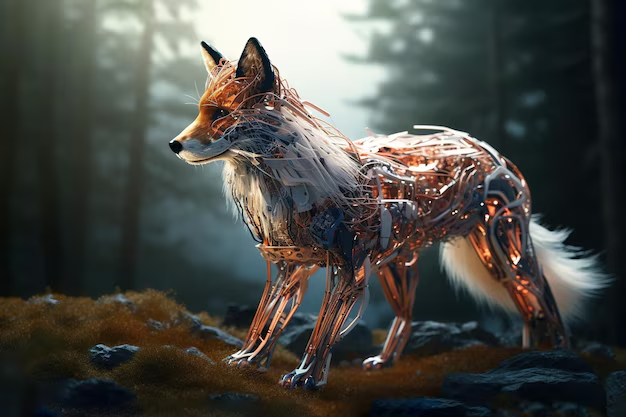
In a warmer world, deserts do not just expand; they become more violent. Sand and dust storms will become continent-scouring events. Most animals will burrow or die. But the AI predicts a specialist: the Dust-Runner. Evolved from the swift fox or the kit fox, this creature has abandoned the need for burrowing entirely.
The Dust-Runner is small, roughly the size of a house cat, but its adaptations are radical.
-
Fully sealed ocular system: Its eyes are covered by a transparent, scratch-resistant membrane derived from fused scales. This membrane also filters out UV radiation.
-
Nostril filters: Elaborate, fan-like nasal passages lined with cilia and mucus that trap 99.9% of airborne particles. The AI modeled this after the baleen of a whale, but scaled down to microscopic precision.
-
Xerocolic metabolism: This is the AI’s masterstroke. The Dust-Runner does not drink water. Instead, it extracts metabolic water from the cellulose of dead, wind-blown plants. Its gut has evolved a series of fermentation chambers containing extremophile bacteria that break down dry lignin and cellulose into glucose and free water.
The name “Ventiscurrus” means “wind squirrel,” and indeed, the AI predicts these animals will be semi-arboreal, using the abandoned skeletons of dead trees as windbreaks. Their fur will be a reflective silver-white to deflect solar radiation, and they will communicate via low-frequency foot-thumping that travels for miles through the dense, dry air.
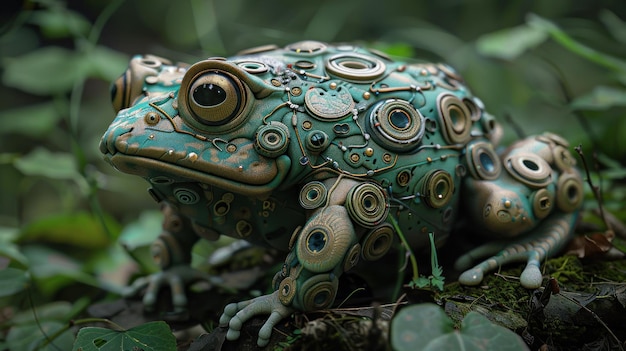
E. The Psychrophilic Jumper (Sarcius gelidus)
Habitat: The residual ice sheets of Greenland and Antarctica (assuming a “pulse-stabilize” climate scenario).
Not all AI predictions are for a hot world. Some models suggest a secondary “ice age pulse” after the initial heat peak, caused by freshwater influx shutting down the Atlantic Meridional Overturning Circulation (AMOC). In this scenario, certain pockets become ultra-cold refugia. The Psychrophilic Jumper, a descendant of the Arctic hare or pika, is the AI’s solution to extreme, starved cold.
This creature is covered in fur that is not just white, but hollow and filled with a low-freezing-point glycol compound (similar to antifreeze proteins found in Arctic fish). This fur is electrostatically charged to repel frost and ice buildup. But its most bizarre adaptation is its locomotion.
Because food is incredibly scarce—only patches of snow algae and frozen carrion—the Jumper cannot afford to waste energy. The AI predicted a highly elastic tendon structure in the hind legs, similar to a grasshopper’s, capable of storing elastic potential energy over several days. When the Jumper detects a food source via its hyper-sensitive infrared vision (which sees the faint heat signature of algae beneath the ice), it releases all that stored energy in a single, explosive leap of up to 50 meters. It lands, feeds, and then remains motionless for another 48 to 72 hours, allowing its tendons to slowly recharge via tiny muscle twitches.
This is an animal of extreme efficiency: no wasted motion, no wasted heat, and no wasted time. It is the master of the cryosphere.
The Role of Human Ruins in Future Evolution
One of the most fascinating aspects of the AI predictions is the consistent inclusion of “anthropogenic structures” as evolutionary drivers. The machines do not ignore us; they treat our ruins as new geological features.
Consider the following predictions regarding human infrastructure:
A. Cities as Caves: AI predicts that the shells of skyscrapers and underground metro systems will become complex cave ecosystems. Animals like the descendant of the domestic cat (which the AI calls Felis ruinus) will develop elongated bodies, loss of pigmentation (becoming pale white), and massive eyes to hunt rats in these perpetual twilight zones.
B. Bridges as Dispersal Corridors: The rusting skeletons of suspension bridges will not fall for millennia. Species that can adapt to high winds and rusty perches, such as peregrine falcon descendants, will use these bridges as “island-hopping” corridors to colonize new continents, leading to a homogenization of global raptor species.
C. Plastic as a Dietary Component: The AI is adamant that plastic pollution will not go away. Within 10,000 years, several bacteria and gut microbiomes in animals will evolve the ability to break down polyethylene. The Dust-Runner, for example, may eventually gain the ability to derive carbon from buried plastic waste, turning our most stubborn pollutant into a food source.
Ethical Implications: Should We Help or Hinder?
The AI’s predictions raise a profound ethical question. If we know what animals will evolve into, do we have a responsibility to assist that evolution? Or do we accelerate conservation efforts to prevent these futures from being necessary?
For instance, the Therma-Tusker is a magnificent creature, but its very existence implies that we failed to stop catastrophic desertification. The Canopy Glider implies we allowed our forests to become fragmented death traps. In this sense, the AI is not just a prophet; it is a mirror. It shows us the biological cost of inaction.
Some researchers argue that we should use “facilitated evolution” – intentionally guiding genetic changes through CRISPR and other tools – to help species become these future forms faster. Others vehemently disagree, arguing that doing so would rob animals of their natural agency and turn the wild into a zoo of human-designed creatures. The AI remains neutral; it merely calculates probabilities.
Limitations of the AI Models
Despite their sophistication, it is important to acknowledge that AI predictions are not divine truths. They have three significant blind spots:
-
The Black Swan Event: AI models are historically trained. They cannot predict a completely novel virus, an unexpected volcanic super-eruption, or an alien intervention. Any of these would reset the evolutionary board.
-
Behavioral Plasticity: Animals are not just bundles of genes. They learn, adapt culturally, and change their behavior faster than their bodies evolve. The AI may underestimate the power of social learning to buffer environmental stress.
-
Coevolutionary Cascades: The AI predicts specific animals, but it struggles to map the infinite web of interdependencies. If the Therma-Tusker evolves, what happens to the parasite that lives only in its old-style trunk? That parasite might take the elephant down with it.
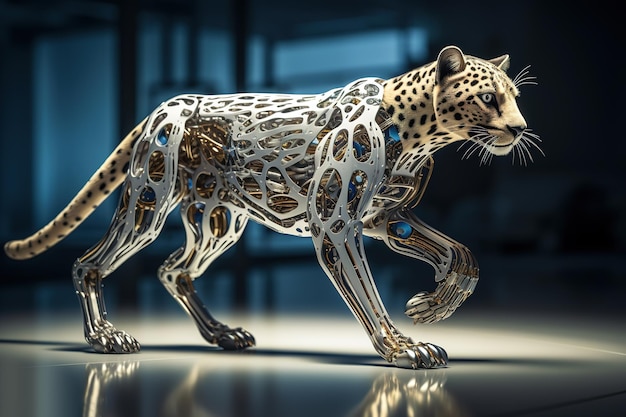
Conclusion: The Synthetic Crystal Ball
The “new future animals predicted by AI” are more than a scientific curiosity. They are the most advanced speculative biology ever attempted. They offer us a glimpse into a world we may never see, peopled by the Therma-Tuskers, Canopy Gliders, Abyssal Creepers, Dust-Runners, and Psychrophilic Jumpers.
Whether these creatures remain digital ghosts or become actual flesh and blood depends entirely on the choices humanity makes in the next few decades. Every ton of carbon we emit, every acre of forest we clear, and every species we drive to extinction is an input into the AI’s algorithm. The machine is not creating the future; it is simply reading our own decisions back to us in the language of fur, scale, and feather.
The crystal ball is broken. The algorithm has taken its place. And what it sees is a planet of wondrous, terrifying, and brilliant survivors life finding a way, not despite us, but often because of the world we leave behind. The only remaining question is: are we brave enough to look?