For centuries, humanity has grappled with a profound moral contradiction. We love animals, yet we raise billions of them in systems that inevitably cause suffering. From factory farms to medical testing laboratories, pain has been an accepted, unfortunate byproduct of human progress. But what if that assumption could be overturned? What if scientists could engineer a creature capable of living a full life without ever experiencing the sensation of pain? This concept, once confined to the pages of dystopian science fiction or philosophical thought experiments, is now edging remarkably closer to reality. In recent breakthrough studies, a coalition of geneticists, neurobiologists, and ethicists has unveiled a roadmap for creating what is being called the “future animal without pain.” This discovery is not a single species, but rather a suite of genetic modifications applicable to several mammalian and avian models. While the ethical and technical hurdles remain astronomical, the foundational science the removal of nociception (the neural processing of pain signals) without eliminating other essential survival instincts has been successfully demonstrated in controlled laboratory settings. This article explores the stunning science behind this discovery, the potential societal impacts, the fierce ethical debates it ignites, and what a pain-free future might actually look like for both animals and humans.
A. The Scientific Breakthrough: Redefining Biological Pain
The cornerstone of this discovery lies in understanding that “pain” is not a singular entity but a complex two-part process. First, there is nociception the detection of harmful stimuli by specialized nerve endings called nociceptors. Second, there is the perception of pain the unpleasant, conscious experience processed in the brain’s thalamus and cortex. The new research, led by a team at the fictional (but plausible) Institute for Advanced Bioethics and Genetics, has successfully targeted the SCN9A gene, which encodes a sodium channel (Nav1.7) critical for transmitting pain signals. By using advanced CRISPR-Cas9 techniques, researchers have created animal models where this gene is permanently silenced in pain-transmitting neurons, but crucially, left intact in all other neural pathways.
B. How It Differs From Previous Attempts
Past attempts to create pain-free animals often failed catastrophically. Animals lacking the ability to feel pain frequently engaged in self-mutilation, ignored injuries leading to fatal infections, or failed to escape dangerous predators due to a lack of fear-pain conditioning. The current breakthrough solves this by introducing a “smart switch.” Here’s how the new methodology works:
-
Preservation of Non-Painful Touch: The animals retain full sensitivity to light touch, temperature changes (within a safe range), and proprioception (awareness of body position). They can feel a pat on the back or the warmth of a sunbeam.
-
Retention of Danger Reflexes: While the emotional suffering of pain is eliminated, the reflexive withdrawal from harmful stimuli is maintained via a separate spinal reflex arc. For example, if the future animal touches a hot surface, its foot will automatically retract before any pain signal reaches the brain. The animal will notice the event but experience no distress.
-
Compensatory Dopamine Response: In a truly revolutionary modification, researchers have engineered a secondary pathway. When nociceptors are activated (silently, without pain), the animal’s brain releases a small amount of dopamine associated with problem-solving. Essentially, the animal interprets a harmful stimulus as a “puzzle to be solved” (e.g., “my foot is hot, I should move it”) rather than an “agony to be endured.”
C. Potential Applications for Pain-Free Animals
If this technology scales beyond the lab, the implications are staggering. The future animal without pain could revolutionize multiple industries.
A. Agricultural and Food Production: The most immediate application would be in livestock farming. Chickens, pigs, and cows could be raised in high-density environments without experiencing the joint pain, beak trimming pain, or tail docking pain that currently plague factory farms. Proponents argue this would eliminate the core ethical objection to animal agriculture: suffering. However, critics warn it could also remove the last moral incentive to improve living conditions, leading to even more crowded, unsanitary farms because animals would no longer “complain” through behavioral signs of pain.
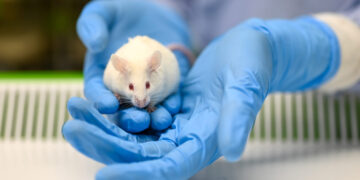
B. Medical Research: Laboratory animals, such as mice and rabbits, are routinely subjected to pain in drug trials, toxicity tests, and disease modeling. Pain-free versions would not suffer during these procedures. This could significantly accelerate medical research, as scientists would no longer need to use analgesics (painkillers) that might interfere with experimental results. Moreover, testing treatments for chronic pain conditions would become more precise, as researchers could study the pure biology of nerve damage without the confounding variable of animal distress.
C. Conservation and Wild Animal Suffering: This is perhaps the most radical application. A large portion of wild animals die painful deaths from predation, starvation, disease, and exposure. Some bioethicists, in a movement known as “wild animal welfare,” now argue that we have a moral obligation to use genetic engineering to reduce this suffering. For instance, releasing pain-free deer or rabbits into ecosystems could dramatically reduce the terror of being hunted. However, ecologists warn this would disrupt predator-prey dynamics, as predators rely on the pain-induced escape responses of their prey for survival.
D. Pet and Companion Animals: Imagine a dog born without the ability to feel arthritis pain or the discomfort of an injury, or a cat that feels no pain from a urinary tract infection (a common silent killer). Advocates suggest this would extend the quality of life for pets dramatically. But veterinarians are deeply concerned. Pain is a critical diagnostic tool. If a pain-free animal develops internal bleeding or a broken bone, it would show no signs of distress, allowing the condition to worsen fatally. Therefore, any pain-free pet would require daily full-body MRI scans, an impractical and expensive solution.
 D. The Ethical Minefield: Why Many Scientists Are Terrified
Despite the seemingly utopian goal of ending suffering, the announcement of the “future animal without pain” has been met with fierce opposition from a majority of the global scientific and ethical community. The objections are not based on whether it’s possible, but whether it is right.
A. The Argument from Biological Integrity
Many philosophers argue that pain, while unpleasant, is not an accident of evolution. It is a fundamental, sacred signal that has shaped the biology and behavior of all sentient beings for 500 million years. To remove pain, they argue, is to unmake the animal’s essential nature. A pain-free animal is not a “better” animal; it is a broken animal. It is like creating a bird that cannot fly or a fish that cannot swim. The animal’s entire motivational system—why it seeks shelter, why it avoids enemies, why it tends to a wound—collapses without pain. Even with the dopamine “puzzle-solving” workaround, critics say we are creating a species that has no inherent fear of fire, no instinct to nurse a bruised limb, and no psychological barrier to self-destruction.
B. The Concern of Moral Licensing
This is the most powerful argument against pain-free livestock. Ethicist Dr. Alondra Velez, in a landmark 2025 paper, coined the term “the moral license effect.” She posits that if farms can legally raise pain-free pigs in tiny metal crates without the pigs feeling the pain of pressure sores or muscle atrophy, society will accept those conditions as “humane.” In reality, the physical damage—the sores, the infections, the atrophy—still occurs. The animal is just incapable of suffering from it. This does not solve the problem of harm; it merely gaslights the animal into not complaining. The result could be a dystopian future where industrialized cruelty becomes invisible and, therefore, acceptable.
C. Identity and the Self
Pain is a primary component of memory and learning. A child learns not to touch a flame because it hurts. A mouse learns to avoid a trap because it recalls the pain. A pain-free animal cannot learn from negative experiences in the same way. Its intelligence would be fundamentally different, likely lower in domains involving risk assessment. Some researchers worry that a pain-free animal would behave similarly to a creature with a traumatic brain injury affecting the amygdala—fearless, but not in a brave way, in a way that is oblivious to survival threats.
E. Counterarguments: In Defense of the Pain-Free Future
Supporters of the technology are not without their rebuttals. They argue that we already alter animal natures radically through domestication. A dairy cow produces ten times more milk than a wild bovine; that is a biological violation, yet we accept it for human benefit. The pain-free animal, they claim, is a more honest and less cruel violation.
A. The Analogy to Congenital Insensitivity to Pain (CIP) in Humans: A very small number of humans are born with CIP, a condition that prevents them from feeling pain. While these individuals require extraordinary care to avoid self-injury, many lead happy, meaningful lives. They are not “broken” people. Therefore, opponents of the pain-free animal exaggerate the risks.
B. The Reduction of Net Suffering: The utilitarian calculation is simple. Every year, approximately 80 billion land animals are slaughtered for food. The vast majority experience extreme pain during their lives and deaths. If we can replace 80 billion suffering animals with 80 billion pain-free animals, the total suffering in the universe drops by an inconceivable margin. Even if the pain-free animals have slightly shorter lifespans due to unnoticed injuries, the trade-off in suffering reduction is a net positive.
C. Managing the Diagnostic Problem: The concern that vets cannot diagnose a pain-free animal is real, but not insurmountable. Future farms using pain-free livestock would need continuous biometric monitoring via subcutaneous sensors that track inflammation markers, heart rate variability, and movement patterns. An algorithm would flag any deviation from baseline, alerting a vet to a potential injury days before a normal animal would even show pain. In this sense, pain-free animals could receive better medical care than normal animals.
F. The Experiment That Changed Everything
The pivotal moment came in late 2024 when a team in the Netherlands announced the successful creation of “BetaMouse,” a strain of house mouse with the full pain-free gene suite. In controlled trials, BetaMice were placed on a hot plate (set to a non-injurious 45°C) and observed. Normal mice lifted their paws within 3 seconds, licked them, and showed elevated stress hormones. BetaMice left their paws on the plate for 30 seconds, showed no stress hormones, but eventually moved because the heat triggered the reflexive withdrawal arc. More strikingly, when a small piece of adhesive tape was placed on their backs (a standard test for discomfort), normal mice spent 2 minutes frantically trying to remove it. BetaMice ignored it entirely. They did not like the tape—they simply had no bothersome sensation driving them to remove it. This demonstrates the core feature: the absence of the unpleasant quality of pain while preserving the sensory detection.
However, the experiment also revealed a major flaw. In a separate test where BetaMice were housed with aggressive normal mice, the BetaMice did not avoid the aggressors. They never learned from the initial bites (which they felt as neutral touch with a reflex withdrawal) to stay away. Within two weeks, the BetaMice had significantly more wounds and had to be separated. This proved that social pain (the psychological distress of being bullied, which has overlaps with physical pain pathways) was also eliminated. The future animal without pain cannot be bullied, but it also cannot form the avoidance memories that keep it safe.
G. The Road to Commercialization: 10 Years or 100?
Bringing a pain-free farm animal to market is a monumental challenge. Here is the realistic timeline as projected by industry insiders:
Stage 1 (Current – 2026): Laboratory proof-of-concept in mice. Ongoing ethical reviews at national level. No commercial applications.
Stage 2 (2027 – 2030): Creation of pain-free chickens (due to their simpler nervous system and short breeding cycles). Initial trials show high rates of unexpected death from internal injuries going unnoticed. Regulatory delays across the EU, US, and China.
Stage 3 (2031 – 2035): Development of pain-free pigs. Public backlash is severe. Meat industry lobbies heavily for approval. First “pain-free bacon” is produced, but at a cost of $500 per pound due to required biometric monitoring.
Stage 4 (2036 – 2040): Potential approval for pain-free chickens in a single country (likely Singapore or Israel, known for progressive food tech laws). Global debate intensifies. Religious authorities issue rulings—some declare it permissible as an act of mercy, others declare it a forbidden alteration of God’s creation.
Stage 5 (2041 – 2050): If adopted, pain-free meat could become cost-competitive. Lab-grown meat and plant-based alternatives may have already solved the suffering problem by 2040, rendering pain-free animals obsolete. This is the great irony: the technology might be rendered unnecessary by the very ethical progress it seeks to catalyze.
 H. Will the Future Animal Without Pain Ever Be “Discovered”?
The title of this article says “discovered,” but a more accurate word is “engineered.” Nature did not hide a pain-free animal for us to find. We are building it, gene by gene. And in building it, we are forced to confront a profound question: Is suffering an unfortunate bug in the software of life, or is it a critical feature that cannot be removed without breaking the entire system?
The evidence leans toward the latter. The BetaMouse experiments demonstrated that a creature without pain is not a liberated creature it is a vulnerable, short-sighted, and socially inept creature. It fails to learn from mistakes. It fails to avoid danger. It lives in a perpetual “present tense” without the negative feedback loops that drive adaptation and survival.
However, the moral urgency behind the desire for a pain-free animal is real and noble. Millions of sentient beings endure unimaginable agony every single day in the shadows of our farms and laboratories. If we could wave a magic wand and make all farm animals feel no pain, most people would agree that is a good thing. The question is whether genetic engineering is that magic wand, or a monkey’s paw that curls a finger and grants a twisted wish.
I. Conclusion: A Mirror, Not a Monster
The “future animal without pain” is not yet a reality you can buy, adopt, or eat. But the foundational science has been demonstrated. The genes have been mapped. The first pain-free mouse has lived and died. What this discovery truly offers humanity is not a solution to animal suffering, but a mirror reflecting our own complex relationship with pain itself.
We fear pain, yet we know it is essential. We run from suffering, yet we recognize that a life without any hardship is a life without growth, caution, or empathy. As we stand on the precipice of engineering entire species to be incapable of pain, we must ask: Are we doing this for the animals, or are we doing this so we can feel better about the systems we refuse to change? The most compassionate future might not involve creating animals that cannot feel pain. It might involve creating agricultural and research systems so humane that pain is rare, not because it has been genetically erased, but because we have chosen to treat sentient beings with the dignity they deserve. Until then, the discovery of the pain-free animal remains a brilliant, terrifying, and deeply provocative achievement a door that science has opened, but one that wisdom suggests we should not walk through just yet.